
Closing the Generation Gap

What if you could turn back time and speak to your parents when they were children themselves? Do you know what their hopes and dreams were back then? Do you know what they wanted to do with their lives?

Our parents and immediate family are the largest influence on our lives. They are our first teachers and role models. During childhood we learn to look at the world through their eyes and their believes become a large part of the way we perceive life. This perspective molds us, creates our belief system and in a way programs our minds leading us to the choices we make later on in life. We make key decisions based on what our childhood consciously or unconsciously taught us. We become to a certain extent a mirror image of our parents and family members.

Our life´s journey takes us from childhood along a series of choices and experiences to adulthood. We become not only responsible for ourselves but also, through our chosen work, responsible towards others. We become mothers, fathers, caretakers, teachers, colleagues, engineers, scientists, managers, politicians… and some of us even leaders of corporations and governments. We become role models and teachers ourselves. We start transmitting our own belief system to those we hold a responsibility to. Like an ever-growing wave we build society through these teachings.

I wonder how many of you who are reading this are perfectly happy with your lives? How many of you encounter challenges? How many of you blame those challenges on your childhood? Have you ever caught yourself thinking arguments similar to the following?

  • “If only my parents would have pushed me more, then I would have studied harder and would be earning more money”
  • “If only my brother would not have been so jealous of me, then I would be a more confident person not trying to please others all the time”
  • “If only my father would have shown his love and pride of me more often, I would be a more confident person”
  • “If only my parents would have been more open-minded and less judgemental, I would find it easier to build relationships with others who are from a different background than I am”
  • “If only my mother would have taken better care of herself, then I wouldn’t be such a pushover.”
  • “If only my father wouldn’t have worked so hard and spent more time with me, then I would feel less of an urge to impress him and instead chose a healthier work-life balance for myself”
  • “If only ….

I believe that we all think such arguments more often than we care to admit. But in doing so we forget 2 essential TRUTHS:

  1. We are ultimately responsible for ourselves and therefore have the power to allow positive and dis-allow negative external influence into our lives, and
  2. We forget to ask ourselves the reasons behind why our parents and family members acted the way they did and sometimes still do.

What if I told you that there is a way you can overcome your challenges and grow a closer relationship with your parents & co? The key to doing this is to remember the 2 TRUTHS above.

Firstly we need to break free from any negative old programming and take full responsibility for our own beliefs, our actions and the resulting experiences we go through in life. We need to re-program ourselves by analysing the reasons behind why we do things the way we do them. There is always a reason behind every decision and resulting action. These reasons are always tied to a combination of beliefs and emotions. If your reasons are tied to negative emotions such as fear, worry for yourself & others, guilt or insecurity then please look again. Try to understand the root cause of your emotions. Once you have identified try to base your future decisions on positive emotions. You will see that not only will your beliefs change but also your experiences and interactions with others.

Secondly we need to change our perception of the past. In our minds we view our childhood as if it was a fixed picture. But in doing so we are building up assumptions and are being judgemental about our parents and those who influenced & taught us. We can change this picture by answering the question to TRUTH no 2. above. We need to remember that our parents & co were once children themselves – children of parents who taught them their own belief system. We need to remember that even if it doesn’t seem that way, our parents & co based all their decisions & actions towards us out of their best intentions but based on their programming.

I believe there are always 2 ways of interpreting someones motivations. The 1st way is assuming the other person wishes you harm and the 2nd way is assuming the other person acts out of good intentions. For example, lets consider again the 1st argument from the list of examples above:

“If only my parents would have pushed me more, then I would have studied harder and would be earning more money”

  1. You could believe your parents didn’t push you because they didnt care enough, or
  2. You could believe your parents didn’t push you because they grew up in an environment where they were taught that love and affection must be earned and is not given freely and unconditionally. You could believe that your parents were worried about repeating this pattern and instead overcompensated by being “too” soft.

How can you find out the truth? By not assuming or judging and instead by asking questions and listening. By opening up a unbiast channel of communication you can change your perception of your parents & co and your past. By understanding the reasons behind why they acted the way they did and sometimes still do, you can close the generation gap and see them as fellow human beings continually learning in this school called life.

Now some of you may now be thinking: “Why should I make such a big effort asking my parents & co about their past? They are old, stuck in their ways and will never change.” Well, I can tell you from experience that asking questions has an amazing effect. You see, as you start a communication channel you start influencing and teaching your parents. As you ask questions and listen, they start analysing their own lives and when they do they may just start understanding the reasons (the programming) behind their beliefs and actions and by doing this they may just eliminate any negative influences from their own past. And this may just result in a much improved relationship between yourself and your parents & co.



Tapping into your Team’s unseen potential

Have you ever looked at the people sitting nearby you in the office and wonder what they do all day? I used to work in large open space offices and wonder how it was possible that so few people were interacting with each other on a regular basis. There were plenty of meetings taking place, for sure, but the agenda was always predetermined and it seemed even the outcome. Each person taking part kept saying the same things from the same perspective. The same topics were discussed over and over but rarely were there new ideas discussed or new ways of making the organisation more successful created.

Now you may think that this is a very generalist and judgemental thing for me to write and have I not created this blog to raise awareness of non-judgement. But please bear with me as I’m trying to make a point. I’m trying to show you that without being aware we make a lot of assumptions about how organisations should function and we thereby keep recreating the same outcomes, like getting stuck in a cul-de-sac, with the challenges around us growing larger and larger.  We judge our colleagues based on observations & assumptions including their job titles, seniority, educational and cultural background without tapping into their unseen potential. Many organisations are stuck in a vicious circle of strategy definition and organisational restructuring to meet the increasing challenges they are experiencing. Management consultants are guiding these organisations in lengthy and costly change management processes which seem to be never-ending projects and often a handing over of own decision responsibility to consultants who have little or no hands-on experience in the specific industry. In the meantime the challenges we see in the world are increasing and despite more and more effort is being placed around solving them, its having the opposite effect.

One of the biggest struggles seems to me that these challenges (I actually like to see them more as opportunities!) are evolving so rapidly, leading to especially large organisations having trouble adapting. In my opinion part of the solution comes from changing our expectations of how organisations should function. How are organisations structured? Which importance do we give to job security vs the space to be creative? How do we view seniority & experience vs fresh ideas & perspectives from young minds? What is the ratio between decision makers and decision followers & executors? How diverse are the backgrounds of employees vs the global nature of the challenge (or opportunity) they are wishing to address? To summarise: which processes underly the way organisations function to date? If you look closely you may find that most organisations are governed by similar processes, like the way an operating system underlies all programs on a computer. And how do most of us feel when working under these operating systems? Do we feel creative and respected or are we being pushed into competing with our colleagues and fearing for our jobs?

New ideas and creative solutions can only come from new perspectives and there is a sea of untapped potential in the minds of those around you. I believe that each human being holds a unique key of knowledge and wisdom. By combining these keys we can unlock our true potential. But so many of us are afraid of speaking out because we think we should stick to what we know (and what we are being told & paid to do) instead of trusting our intuition. We need to connect our ideas, respect each others unique views and opinions and make decisions for the common good. We need to create platforms and new structures inside and across organisations for sharing information and coming up with creative solutions to growing challenges.

What does all this have to do with global peace and non-judgement? Well, I believe that peace can only exist if all members of our society are treated fairly and with respect, and this is only possible if the views & needs of everyone are taken equally into account. We need to get off the hamster wheel and open our minds. We need to start communicating and working together at a whole new level.

Enemy or Friend?

How many of you reading this are experiencing conflicts in your relationships? How many of you have recently broken off a relationship with someone or have been told by another person that they don’t want to see you any more?  If you feel you are a going through a challenging year then let me put your mind at ease and tell you we all are. Like an old wound that’s been festering under a low quality plaster, the issues that we have been experiencing in our relationships over the years are rising to the surface and causing an escalating series of conflicts. This is happening in private, business and political relationships resulting in family breakups, company feuds and even war between nations. So many of us have reached a stage where we say “Enough is enough! I wont be treated like this any longer!”. Why is this the case and how can we turn these conflicts into relationships with a solid foundation of peace and mutual trust?  The key is RESPONSIBILITY – we need to take full responsibility for what we are experiencing instead of blaming others for the conflict.

system-2521728_1920

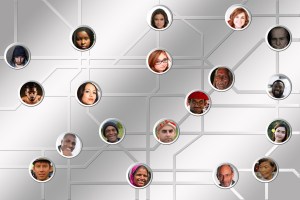
Our society is essentially a web of co-operative structures. Marriages, families, friendships, business partnerships, companies, nations are all examples of the same basic structure, where a group of people commit to live together and co-operate for the common good. When these structures run smoothly every member feels respected and cared for but when there is disharmony the structure starts tumbling like a house of cards where there is an imbalance in the relationship between two or more of the members of the structure. What is the route cause of this disharmony?

When we feel dis-respected or mistreated, we become hurt and angry. We instinctively protect ourselves by pushing away those who are doing this to us. But lets take a closer look at this statement “He or she is doing this to me!”. Because there is a fundamental difference between how we perceive another person is treating us to how that person perceives he or she is behaving. The reason for this is our own blind spot – our own emotions. How can we see each other clearly and avoid misunderstandings? By first working on the invisible but by far more important relationship – the relationship with ourselves.

Instead of judging others by the way they treat us, we need to re-define this to the way we react to others. Instead of seeing others like some kind of external force we have no influence over, we need to become aware of how we perceive ourselves as our external relationships are simply a mirror of our relationship with ourselves. Because the simple truth of the matter is that it’s not the things we say to each other which is the driver of our relationships troubles. Its how we feel about ourselves that determines what we say to each other and how we interpret each other.

Lets walk through some examples:

  • A man gets hurriedly on a bus and asks the bus driver if the bus will stop at his office address. The bus driver gives the man an unfriendly snort and ignores the question, instead pushing the accelerator causing the man to nearly fall without having time to find a seat. The man thinks: “What a rude bus driver”. But digging deeper what could be the truth behind the curtain: Without being aware the man may have been feeling stressed about being late for work and phrased his question to the bus driver in a rather short way. The bus driver in turn may have seen the man dressed in an expensive suit and felt unhappy about his lower-income job. Because of his insecurity about himself, he may have interpreted the man’s question as rudeness and as a result reacted by ignoring the question all together and speeding up the bus.
  • A woman has her parents visiting for the weekend. She feels tired and insecure about being a good mother to her young children. She feels guilty for sending her children to daycare so that she can have some time to herself. During the visit she constantly feels criticised by her parents as they are pointing out all the mistakes she is making when taking care of her kids. She starts pushing her parents away and telling them to mind their own business. Her parents, on the other hand, notice her tiredness and because they care about her and their grandchildren wish to help her by giving her advice. They are however unaware of the fact that they feel insecure about themselves. Now that they have reached retirement age they are worried they are of no use any more. They interpret their daughters reaction as being rejected and evidence of their fears.

What the people in the examples above don’t realise is that they themselves are creating their experience. Their own feelings are the driver behind how they are acting towards others and how they interpret others actions.  So how could these conflicts have been avoided:

  • If the man getting on the bus would have understood that his worries about being late for work were a result of his insecurity of not being a valued employee, he could have avoided becoming stressed and phrased his question to the bus driver in a more respectful manner. Alternatively if the bus driver would have felt happy in his job, he would have responded differently to the well dressed man getting on the bus.
  • If the daughter would have felt confident about being a good mum, she would have understood that the reason behind her parents behaviour was their own fears. Instead of shouting at her parents she may have asked them in a kind way to help her differently such as being happy and making her laugh about the little challenges with her kids. If her parents would have felt confident about themselves, they may have understood that the real reason they were giving their daughter advice wasnt to help her but to satisfy their own need to be useful. They may have understood that what their daughter really needed wasnt their advice but instead emotional support.

We act and react based on how we feel about ourselves. In order to change our relationships we need to become aware of our own feelings and like a compass change from negative to positive emotions. We need to resolve the relationship with ourselves.

If you feel inspired by what I’m writing, try this exercise for yourself.

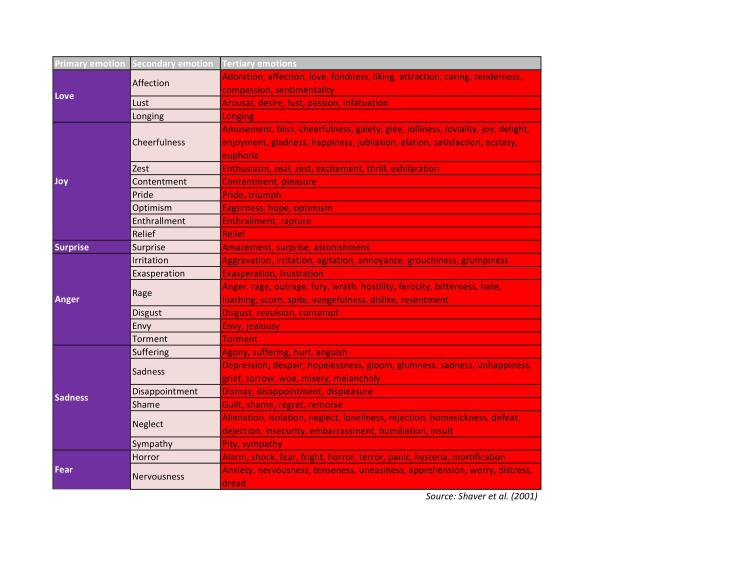
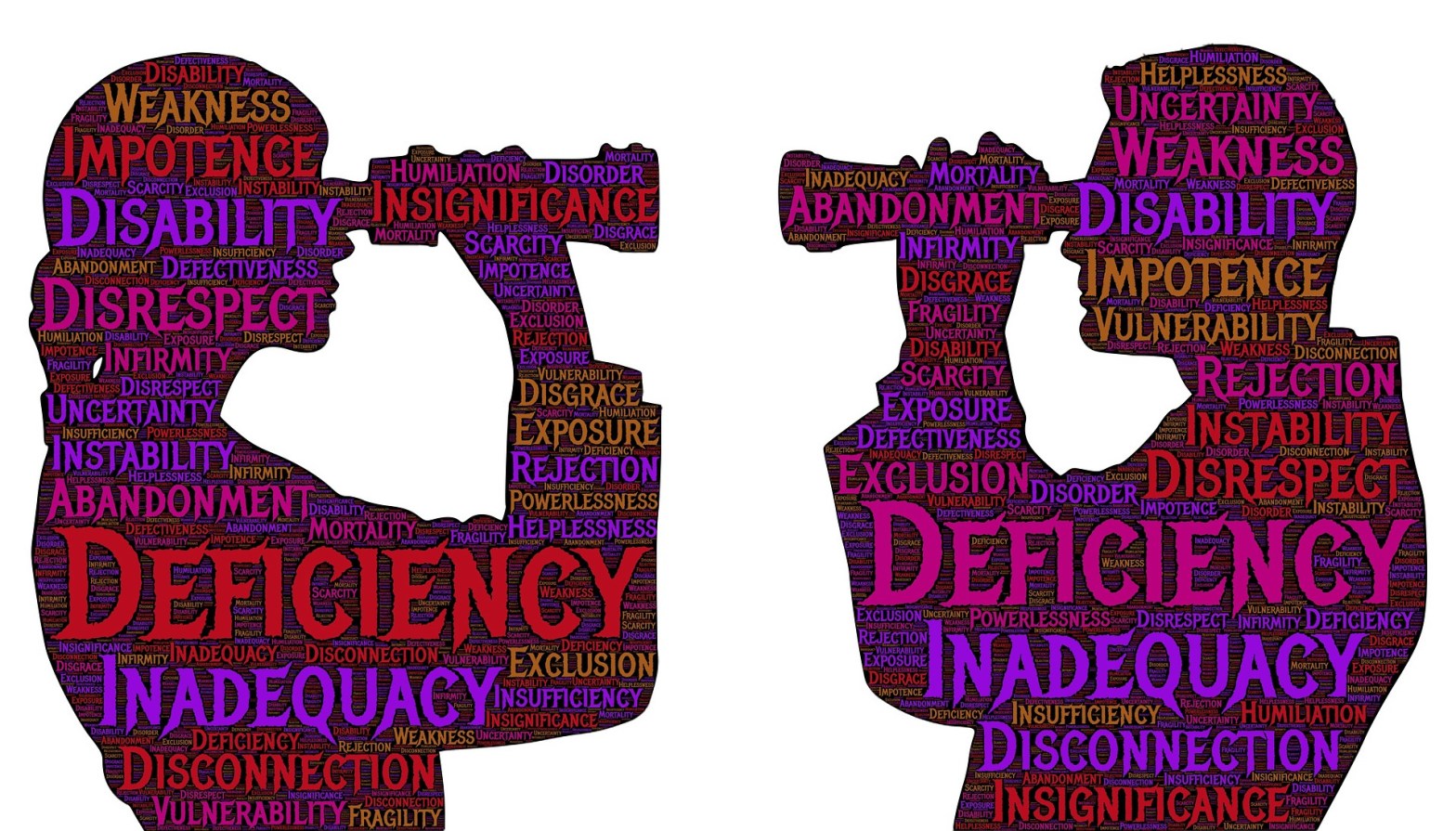
  1. Think of a current conflict you are experiencing, whether in your private life or at work, and make a list of how you feel. The table below shows an overview of the main emotions which can be your guide.
  2. Next, against each of the emotions you have listed try to find the reason why you are feeling the way you are feeling? Try not to blame the other person involved in the conflict or people from your past, but instead focus on yourself.
  3. Ask yourself the question: When was the first time in my life that I felt this way? What occurred back then that created this feeling in me? Try to find the root cause for your feelings.
  4. Then make yourself the following commitment: “I promise myself to stop feeling this ………”
  5. Then watch what happens in the way you perceive yourself and your current conflict…

Please share your experiences as I would love to hear from you.

Emotions Map jpg


How to connect with others

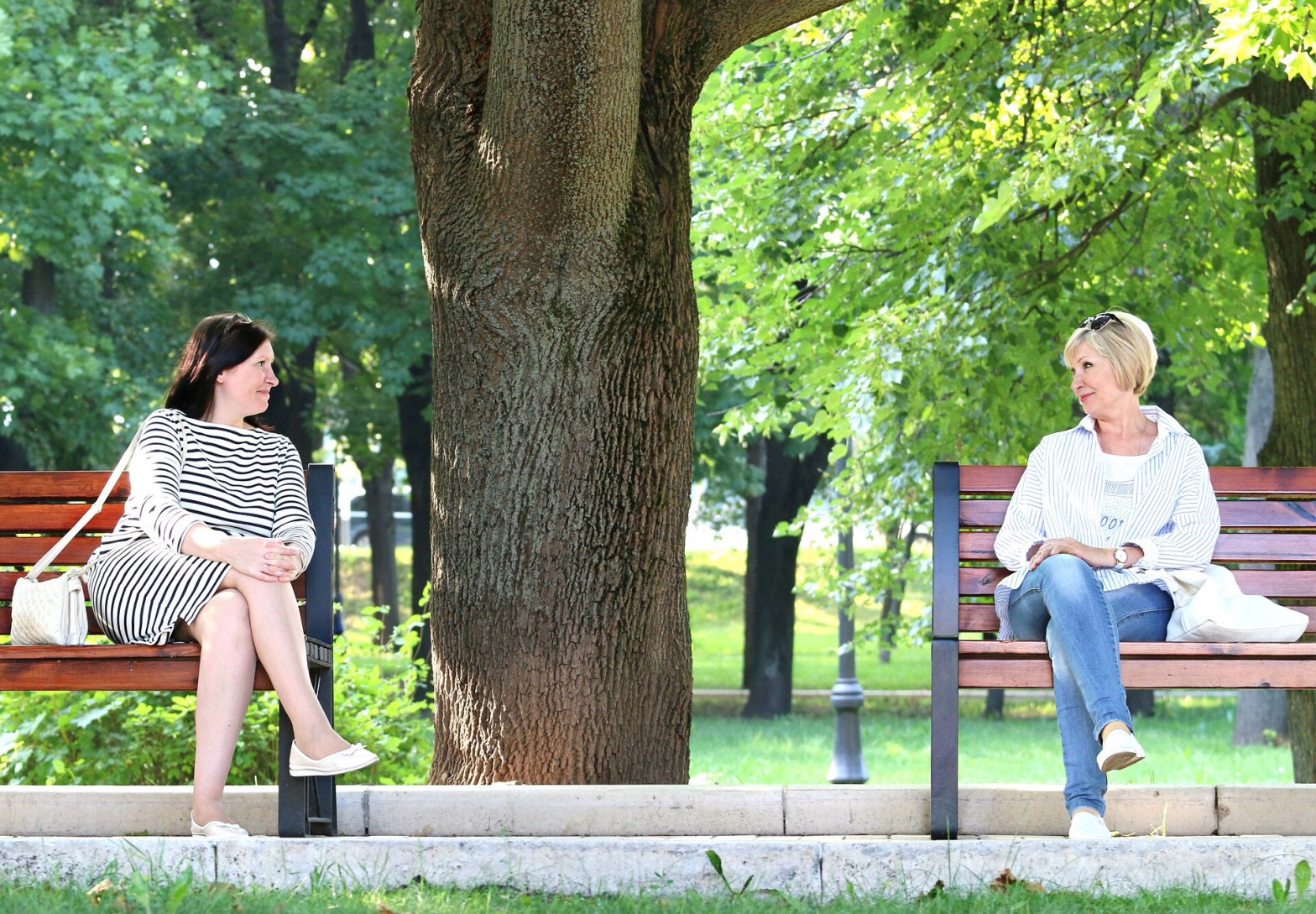
 What do you see when you look at this picture. Do you see two women interested in one another or do you see two women keeping distance from one another. Your interpretation can give you a clue about how easily you connect with others because how we perceive situations is directly linked to our own believes and experiences.

Why? Because if you perceive these women are interested in eachother then you are focussing on what they have in common such as they have similar age, dress sense, interest in walking through a park. Maybe they are both mothers since its daytime and they dont wear suits. If they are both in this park they probably both live in the same neighbourhood and like the same places to visit. Perhaps there are restaurants and museums nearby they both go to or perhaps they both shop at the same specialist food stores or visit the same library. Perhaps they have similar hobbies….there are so many of these topics they could start talking about. Once they found common interests these women could build a beautiful relationship and collaborate on many different levels. Lets organise playdates for our kids, lets share advice on books to borrow from the library, lets exchange goods such as paints one woman has too much and the other one needs in return for toys. Relationships after all are based on finding common ground and collaborating together.

Then there is the 2nd interpretation. A perception that these women are looking at each other in mutual judgement. This interpretation of the picture could be based on one or both women making assumptions over one another ie each thinks they already know the other person withoutfirst asking questions and listening to what the other has to say. Perhaps the lady on the left sees the expensive watch that the lady on the right wears and assumes: “Oh she must be very rich and looks down on people like me”. But is this true or is this merely her perception. Perhaps its her own fears of being poor that creates her perception. And as the lady on the left is looking at the watch with a serious expression on her face what does the watch owner perceive? Perhaps she thinks this other lady thinks Im spoilt because I wear this expensive watch. But is this the truth? Perhaps its just her own guilt at having money, some believe from childhood that being rich means being selfish. What is interesting is that both perceptions are in a way true but only for the one who is the perceiver. Each woman sees her own believes and fears reflected in the other like a mirror image.

So what could they do to make a connection? They could start by focussing on the commonalities and ask icebreaker questions like :”I noticed you often in this park. Do you live nearby?”. Often all it takes is one side to make the first move. Because as we start talking to one another we almost always find things we have in common. And as we get to know one another we can let go of our own fears and false believes to achieve what I believe every human being on this planet wants – to connect with others!

Why do we judge?


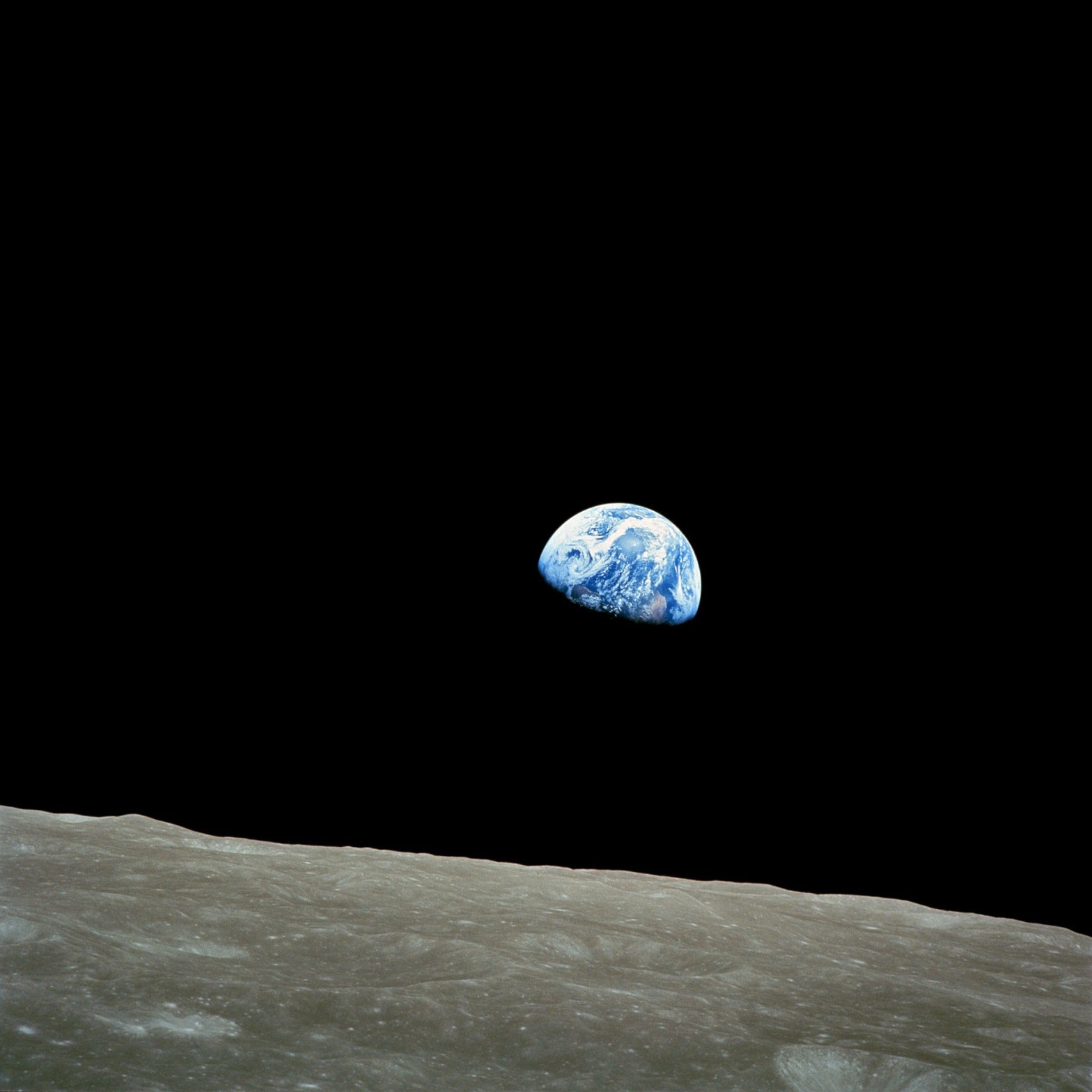
As a child I became fascinated with Astronomy. The more I read about Earth and its position in our galaxy the more I started realising how small our planet really is compared to the vastness of our universe. I used to look at pictures of our planet shot from space and wonder how is it possible that we all live on this one small ball shooting at incredibly speed through space and yet so many of us feel disconnected from each other. With curiosity and wonder my childhood perception of the world was amazing human beings living together on this planet, each gifted and fascinating in their own unique way yet connected through so much commonality.

But then as I was growing up, my perception started shifting through the negative influences of people around me who held prejudices and were judgemental about their fellow family members, friends and colleagues. I started believing these viewpoints and became judgemental myself. As a result many of my relationships experienced conflicts and some even ended. I had forgotten who I was and allowed myself to be influenced by the opinions of others who were insecure and scared.

10 years ago I started a new journey of self-discovery. As I started to heal a broken heart from childhood I began seeing the world as it should be and not as it is perceived by many. A world full of potential for living together in harmony. I started to wonder: is this what happens to most people as they grow up? Do we allow ourselves to be influenced by fear and forget how truly connected we really are? I believe we all have access to a blueprint of living together in harmony but we have lost our way.

My intention with this blog is to share my own experiences with those of you wishing to read and brainstorm with me. My hope is that as we understand that we are not so different from each other after all, we will stop judging and start cooperating more within our marriages, our families, our social circles, our work places and amongst nations. The world can be a peaceful place but we all have to do our part to get there. We all have to (re)-learn how to by kind and trusting towards each other despite our differences. We need to off the glasses that were imposed on us through a lifetime of living in a judgemental world. We need to use our own eyes to see the true reality of our world. We need to reach out and hold each others hands and only in unity can we overcome todays obstacles!